Kerameikos Athens: Guide to the Ancient Cemetery
Practical guide to Kerameikos Athens: learn what to see in the ancient cemetery, how to get there, best times to visit, and tips for combining it with nearby historic sites.
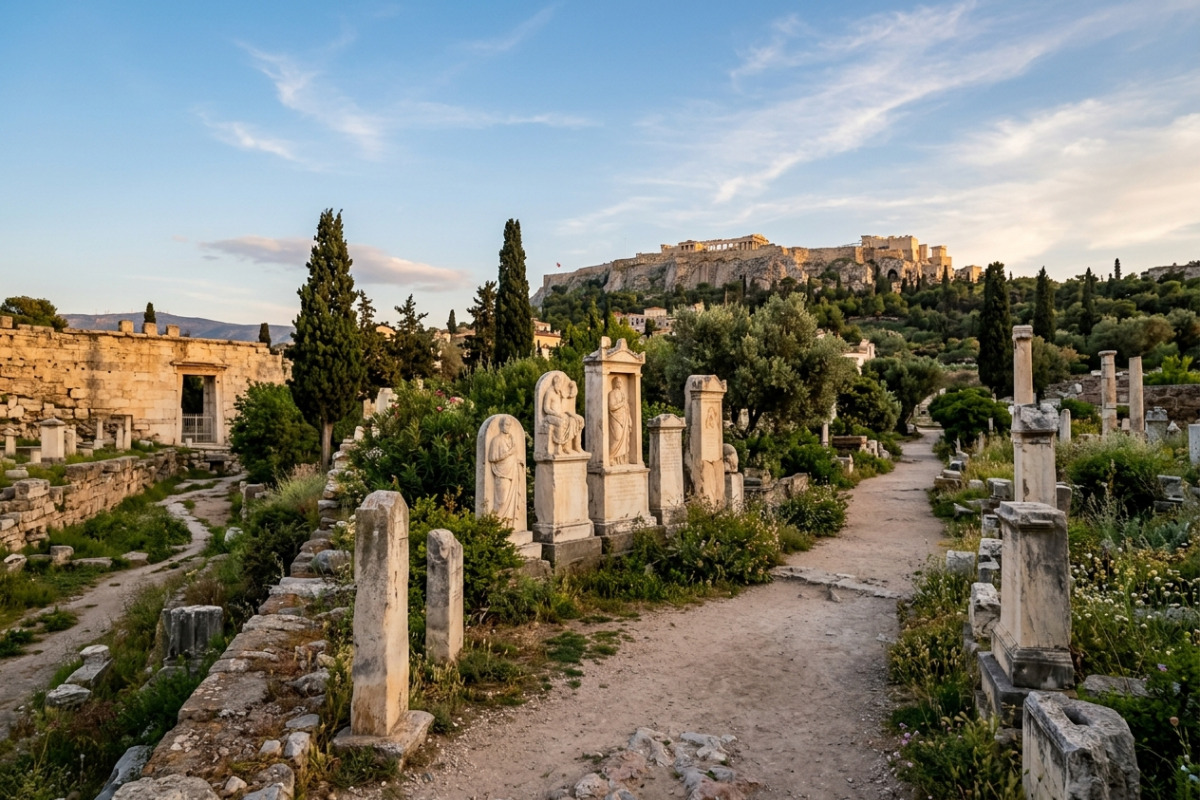
Kerameikos Athens sits quietly on the northwest edge of the modern city, yet it holds some of the most intimate and evocative traces of ancient Athenian life and death. If you want a quieter, more reflective archaeological experience than the Acropolis bustle, Kerameikos offers funerary reliefs, gate ruins and a small museum where stories of everyday Athenians come alive. It is one of the most fascinating neighborhoods for history enthusiasts.
Why visit Kerameikos Athens?
Kerameikos functioned as both a potters' quarter (named after 'Keramos') and the main cemetery for classical Athens. Walking its avenues of tombs and monumental markers gives you a direct connection to ancient social customs, funerary art and civic memory. The site's fragments—relief carvings, inscribed stelae and sculpted graves—reveal personal details that grand temples rarely show. For more context on the city's layout, explore our Guides section.
Beyond the artifacts, the archaeological park frames how Athens expanded outward: you can still trace the line of the Themistoclean Wall where city defenses met the burial ground. For anyone interested in ancient daily life, epigraphy or funerary iconography, Kerameikos is a compact, information-rich stop that complements larger museums and monuments.
What to see: highlights inside the site
Start at the visible remains of the Dipylon Gate and the Sacred Gate. The Dipylon was the grand entrance to the city, while the Sacred Gate served the Sacred Way, which links to the Eleusinian mysteries. You can also see the remains of the Eridanos River, which still flows through the site. The contrast between funerary monuments and ruined fortifications helps you understand how the living and dead coexisted in urban planning.
- Dipylon Gate & Sacred Gate — massive stone foundations; imagine processions leaving the city.
- Funerary stelae — carved gravestones with portraits and inscriptions that bring individual stories into view (look for the famous Bull of Dionysios).
- Street of Tombs — a well-preserved section showing how status was displayed through monumental architecture.
- Kerameikos Museum — a compact collection of reliefs, pottery and the original sculptures from the site; essential for context.
Take time to read the inscriptions or use an audio guide: small details—names, ages, professions—turn abstract history into real human stories. Photography is permitted in most outdoor areas but check signage inside the museum.
Practical tips: timing, tickets, and getting there
Plan at least 60–90 minutes for a focused visit: 30–45 minutes outside among the ruins and another 20–30 minutes for the museum. The site is much quieter in early morning or late afternoon; visiting outside the peak 11:00–15:00 window improves light for photos and gives you space to linger.
Tickets and opening hours change seasonally, so check updated information before you go. If you want bundled options or skip-the-line choices, explore Museum Tickets and related offerings. Kerameikos is modestly sized but sits on uneven ancient terrain, so wear sturdy shoes and a hat for summer sun.
- How to get there: take the metro to Thissio or Kerameikos station; walking from central neighborhoods is pleasant and scenic. See Athens Transport info for routes.
- Accessibility: some outdoor stretches are uneven and not fully step-free; contact local services if you need assistance.
- Facilities: limited on-site services—use nearby cafés before or after your visit.
Making the most of your visit: routes and combos
Kerameikos sits well within a compact archaeological loop. After the site, you can walk east toward Monastiraki or continue to the lively Psyrri neighborhood for food and coffee. This makes Kerameikos ideal as a mid-morning stop before a longer exploration of Athens' food and nightlife.
Here’s a practical short route that fits into a half-day:
- Begin at Kerameikos: explore the gates and the Street of Tombs (60–90 minutes).
- Walk east to the Ancient Agora area for a quick exterior view or further exploration.
- Finish with lunch in Psyrri; sample local street food or a taverna in the area.
If you travel with children, keep explanations simple—focus on the stories behind a few reliefs—and combine the visit with nearby family-friendly activities listed under Family Tours.
Summary and next steps
Kerameikos Athens rewards curious visitors with intimate artifacts and a quieter atmosphere than the city's more famous monuments. Its funerary reliefs, gate remains and small museum deliver meaningful context about daily life and civic ritual in antiquity. For more ways to structure your trip, check out our recommended itineraries.
Ready to plan the rest of your historic route? Browse our Historic Sites collection or check available guided options via Tours to combine Kerameikos with other must-sees.
